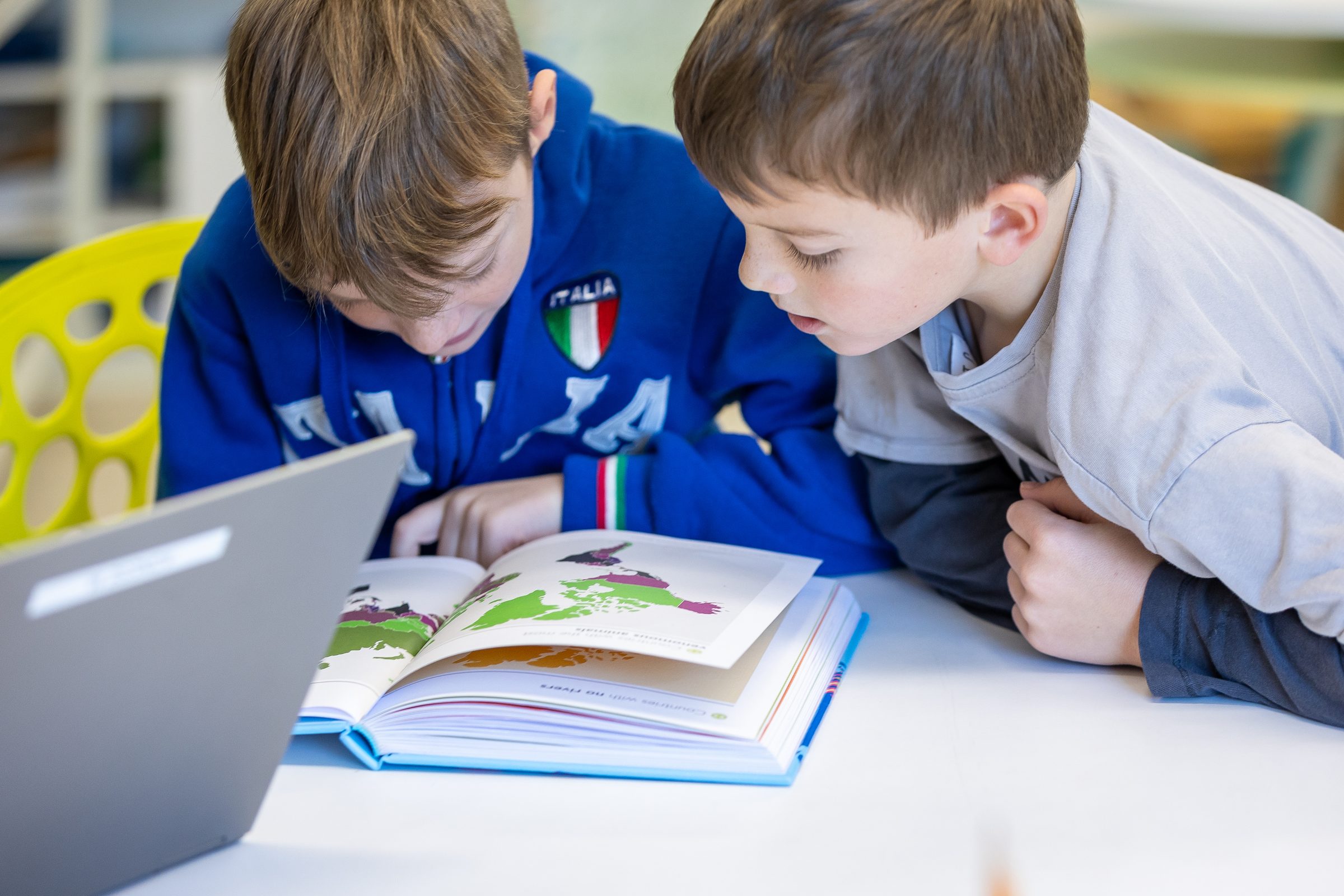
Inmersión lingüística
Students who speak multiple languages have better control over their attention, decision making, and planning. Being multilingual is also a strong predictor of both academic success and lifelong happiness.
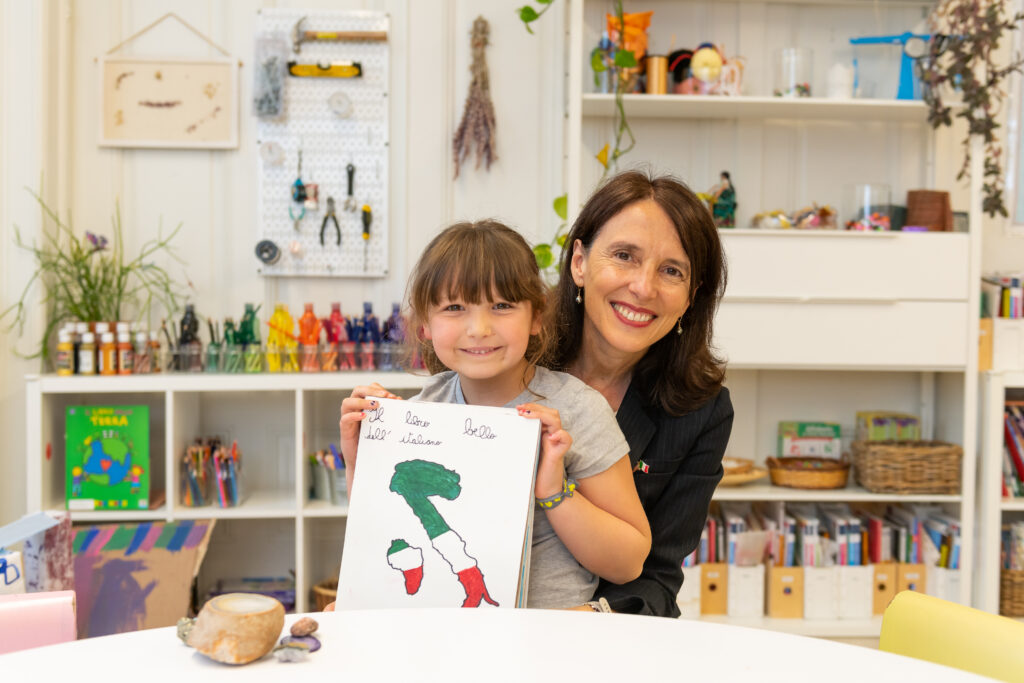
Why Italian?
La Scuola International School started in San Francisco as a playgroup for local Italian and Italian-American families. Since those first days, we have grown to encompass families from around the world, many of whom receive their introduction to Italian at La Scuola.
We continue to adore Italian for many reasons. We love how it grounds our students in English’s Latin roots, how it opens the door to Romance languages, and for how it provides a way into European art, music, history, and science.
The Benefits of Multilingualism
Hear from Daniela, our Elementary and Middle School Spanish teacher, about the power of language learning!
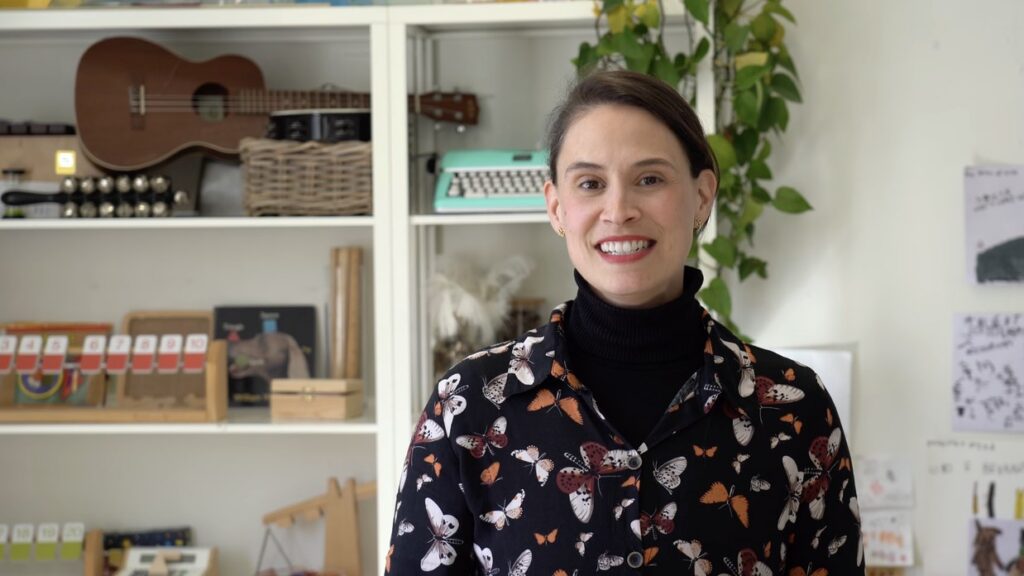
English version
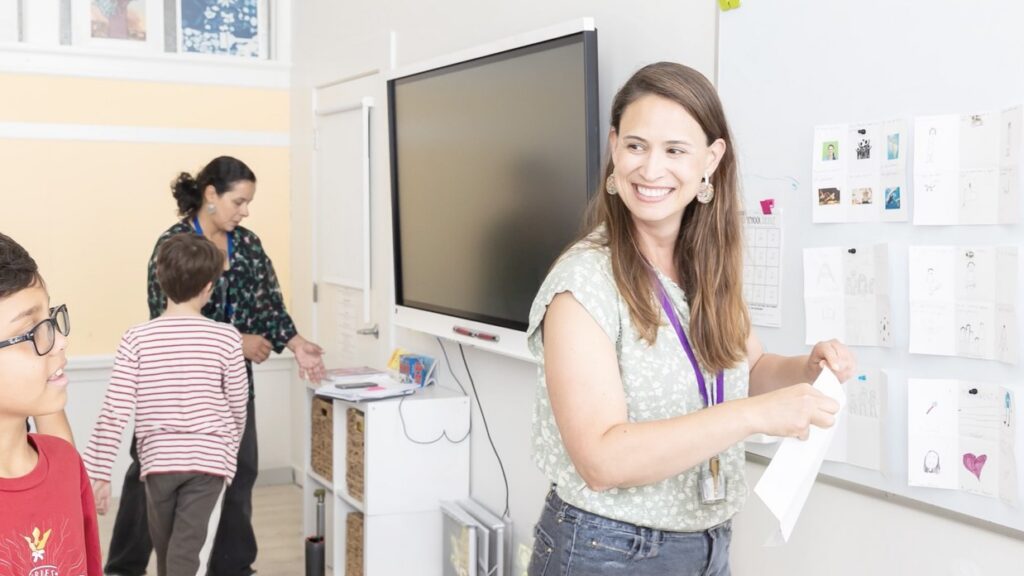
Spanish version
Niente Senza Gioia. Nada Sin Alegría. Nothing Without Joy.
Early exposure to additional languages enables more neural connections to form in children’s brains, actually improving their skills in their first language.
Students entering La Scuola for preschool, kindergarten, first grade, and sixth grade receive a joyous and gentle welcome to Italian. Those applying to other grades will be evaluated during the admissions process to ensure they have a similarly warm experience.
In preschool, conversation and class is primarily in Italian. The percentage of English gradually increases so that by fourth grade time is split between English and Italian. Then, in fifth grade, we introduce Spanish as a third language.
In middle school, students can choose either Italian or Spanish as their second language and the other as their third. Instruction is primarily in English, with students receiving six hours of language instruction every six days, with time split four hours / two hours between their second and third languages respectively.
Montreal Model of Language Immersion
Based on evidence-based immersion models, here are the approximate percentages of how languages are used through the grades.
*Specialist subjects may be taught in English or Italian. Middle school students receive instruction in both Italian and Spanish.